
Articles & Ideas
Showing 13 articles
Extract → Organize → Apply
No single reading strategy fits every scientific text. Start with a stable workflow—extract what matters, organize the relationships, then apply the learning—and bring in tools like Reciprocal Teaching, text structure, visuals, QAR, and CER when they actually help.
Read More →
Think Like a Scientist
A four-square notebook routine gives observations, explanations, questions, and revisions a place. Explore classroom examples, sentence frames, and ways to help students recognize when each kind of thinking is useful.
Read More →
Tracking Science Learning Across the Year
Make scientific thinking easier to track across units with editable science practice and crosscutting concept trackers, a shared 1–4 scoring framework, and an Ecosystem Dynamics resource guide.
Read More →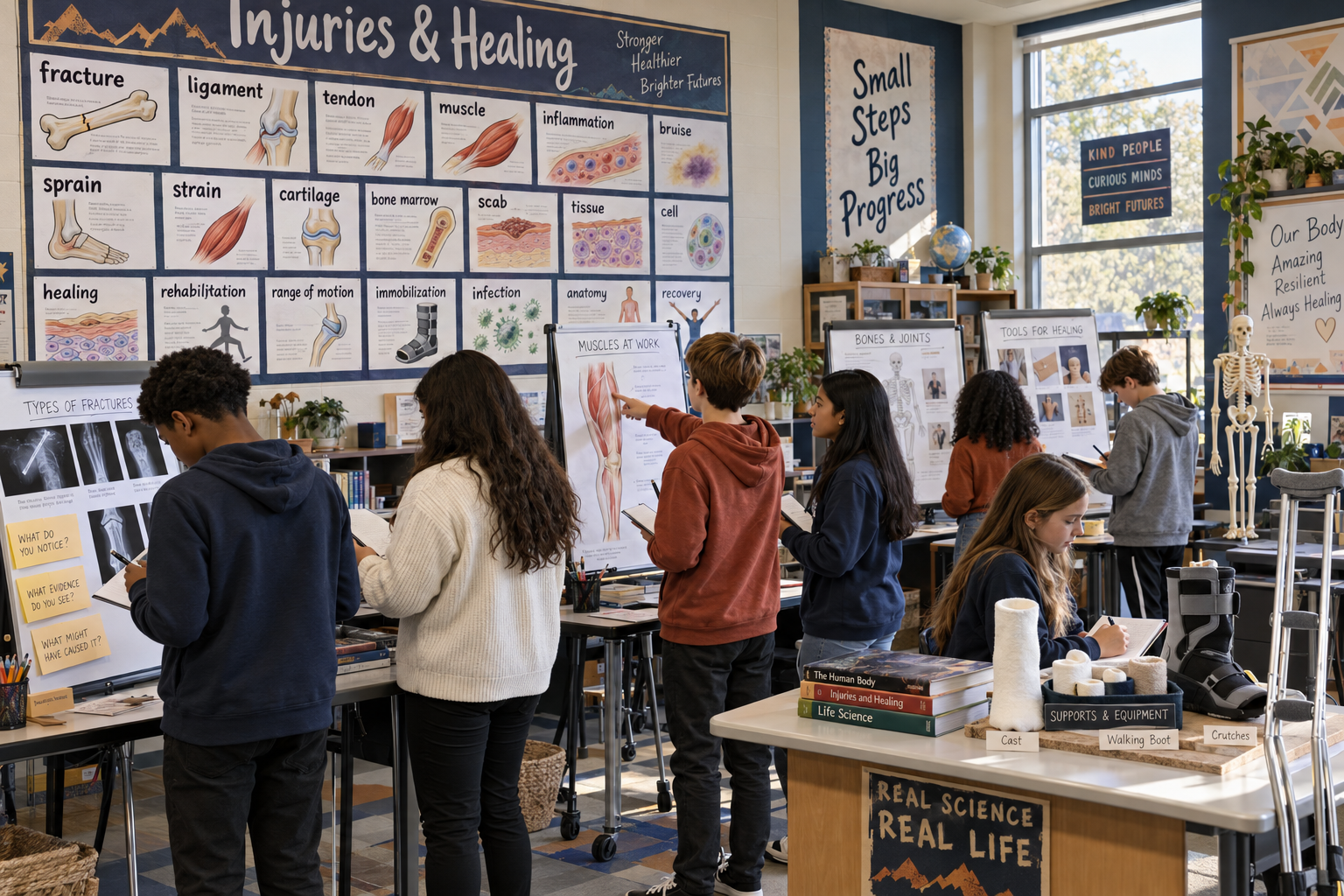
AI Word Wall & Vocabulary Practice
Start with one carefully reviewed vocabulary set, then use AI to turn it into readable wall cards, digital retrieval practice, low-tech notebook flash cards, and a richer classroom information environment.
Read More →
A Classroom Full of Clues
Donated medical supplies, anatomical models, and X-rays become six stations for exploring injuries and healing. Take a photo tour of the setup and see how students can touch, question, and capture their thinking.
Read More →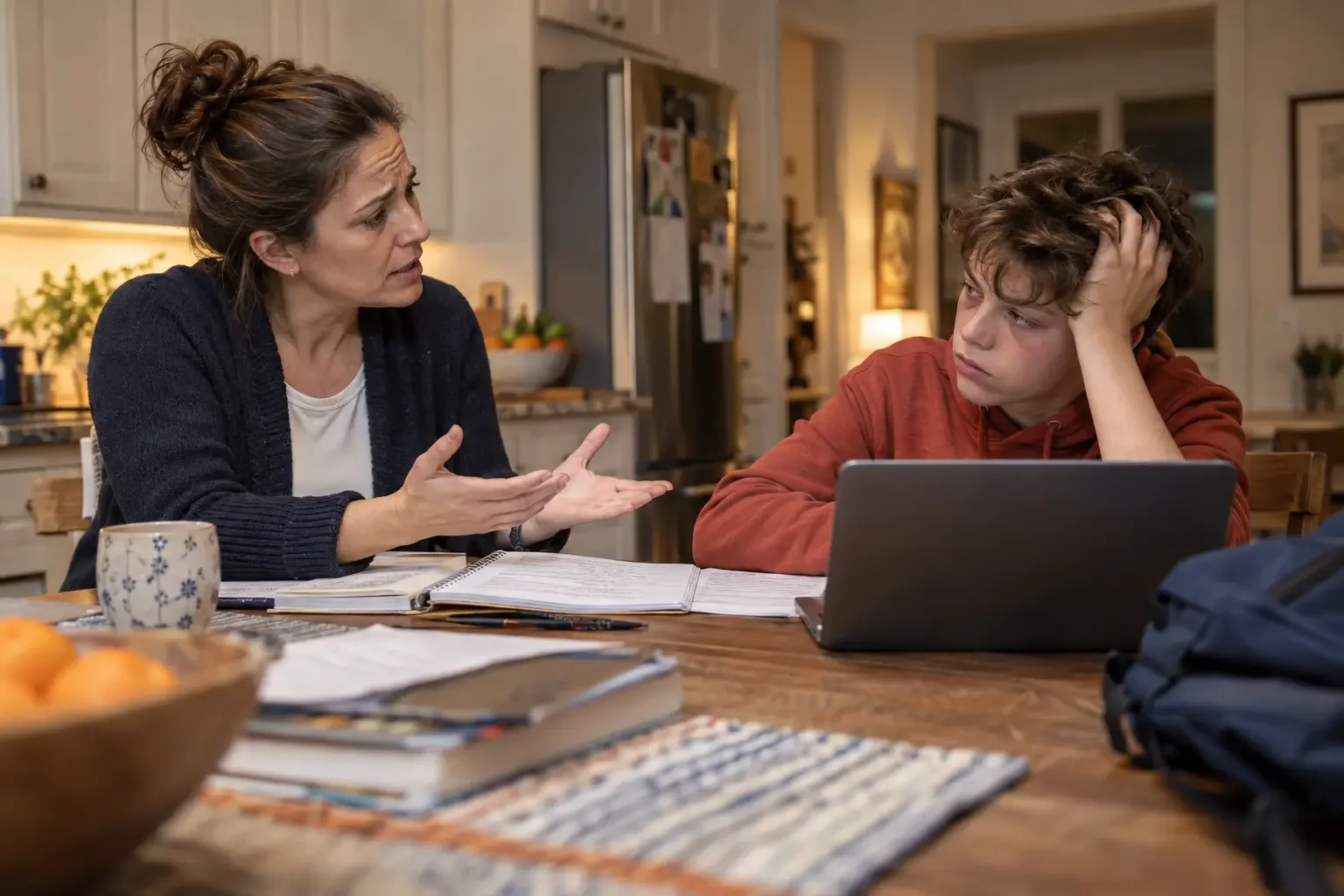
Back to School Night in Eight Minutes
Eight minutes cannot explain an entire course, but they can show families where learning lives, how to check the evidence, and how to help students respond before small problems grow.
Read More →
Let’s Build It. Then Let’s Break It.
An OpenSciEd Unit 6.6 launch takes shape around students’ question: how much weight did the student drop? Explore a mystery injury simulator, plans for hands-on models, student evidence logs, and an AI vision board with scientific mistakes to spot.
Read More →
Our Devices Are Listening. That Can Be a Good Thing.
A department-meeting experiment sparks a plan for using dictation and ChatGPT to capture classroom discussions, organize student questions, and create useful notes—with ideas for feedback and tools to try.
Read More →The Grade Is Information. What Comes Next Is Education.
A teacher’s daughter earns a 68%, sparking a research-informed reflection on grades, productive struggle, study habits, feedback, and the help students need after a setback.
Read More →
Fifteen Years In, Starting Over Again
An experienced teacher rethinks first-day routines, curriculum, and classroom practice—and considers how AI might keep expertise from hardening into rigidity.
Read More →
Beyond See–Think–Wonder
A familiar thinking routine, pushed one step further. Students follow one observation through explanation, investigation, and meaningful revision.
Read More →
The AI Tutor in My Pocket
AI didn’t do the learning—it made better practice easier to create. A practical approach to tutoring without replacing thought, effort, or productive struggle.
Read More →
Homework Isn’t the Problem
Bad homework—and district silence—are the problem. A classroom-tested case for brief reflection, supported long-term work, and a coherent K–12 homework policy.
Read More →No articles matched that search.
Try a broader word or choose “All Articles.”