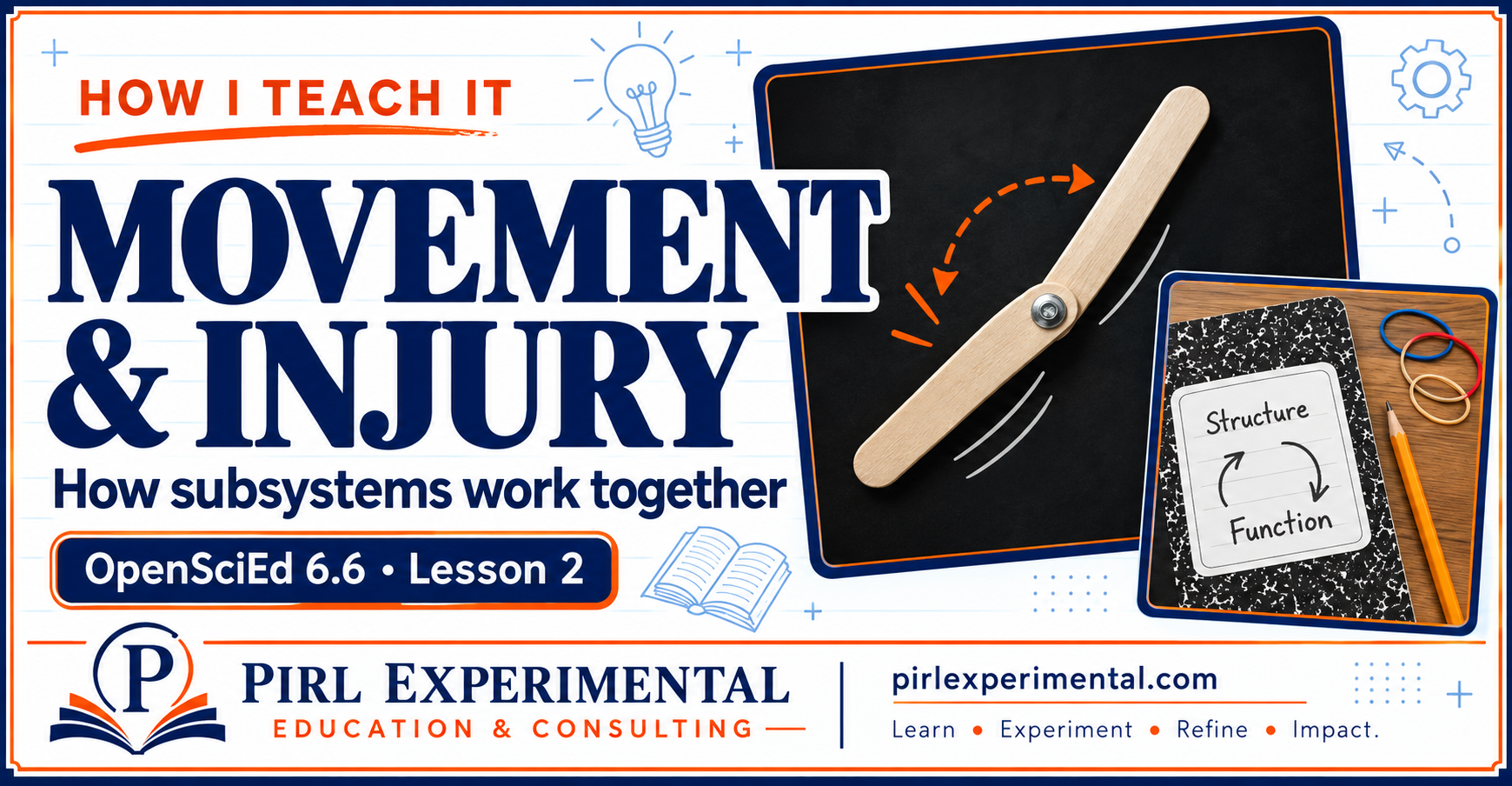
Unit 6.6: Lesson 2
An arm model, an injury simulation, and three days of notebook work helped students explore how subsystems work together—and what happens when one is damaged. Here’s what worked, why the spring-scale measurements fell short, and why I’m bringing back the frog-leg dissection.
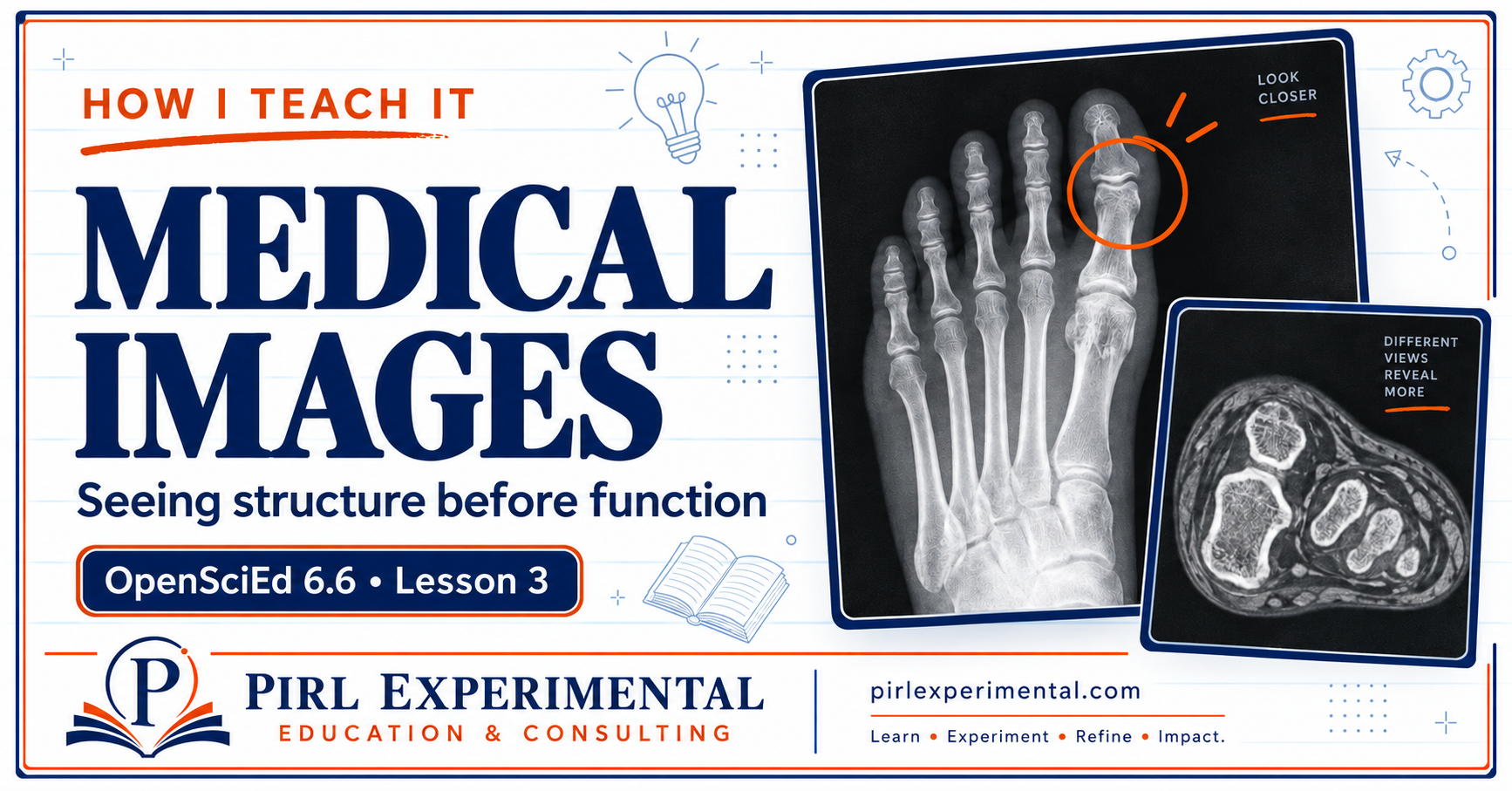
Unit 6.6: Lesson 3
Medical images give students a way to look inside the body—but learning to interpret them takes practice. In this look at OpenSciEd 6.6 Lesson 3, I share how I combine an interactive simulation, purposeful reading, and classroom discussion to help students identify structures, connect parts to larger systems, and support their explanations with evidence.
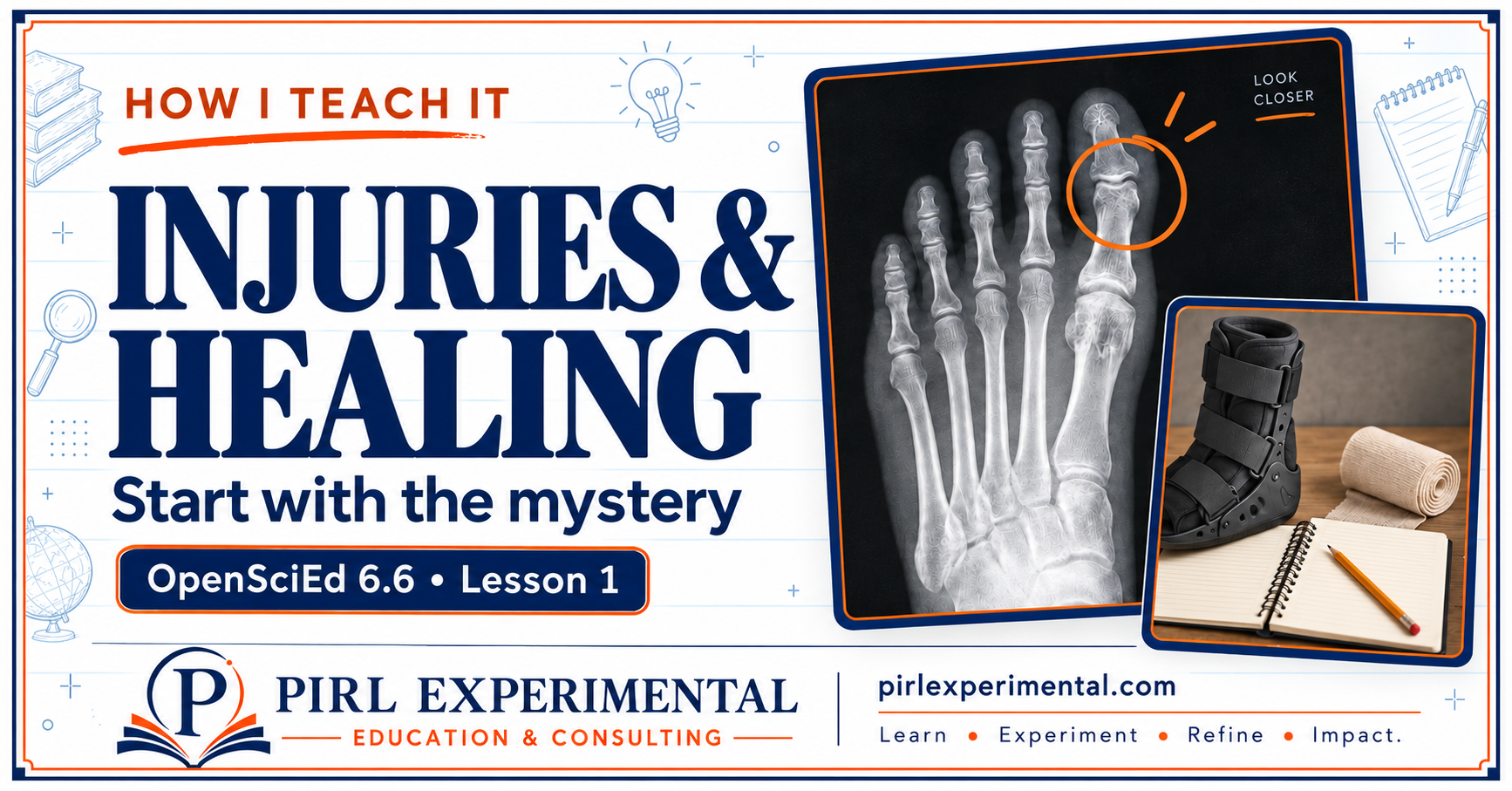
Unit 6.6: Lesson 1
An injured foot gives students a mystery to investigate. In this look at OpenSciEd 6.6 Lesson 1, I share how I launch the Injuries and Healing unit across two class meetings using medical reports, the Injury Mystery Lab, notebook routines, and hands-on recovery equipment. Students practice making observations, supporting explanations with evidence, and revising their ideas as new information emerges.