Expertise Should Be Shared, Not Guarded
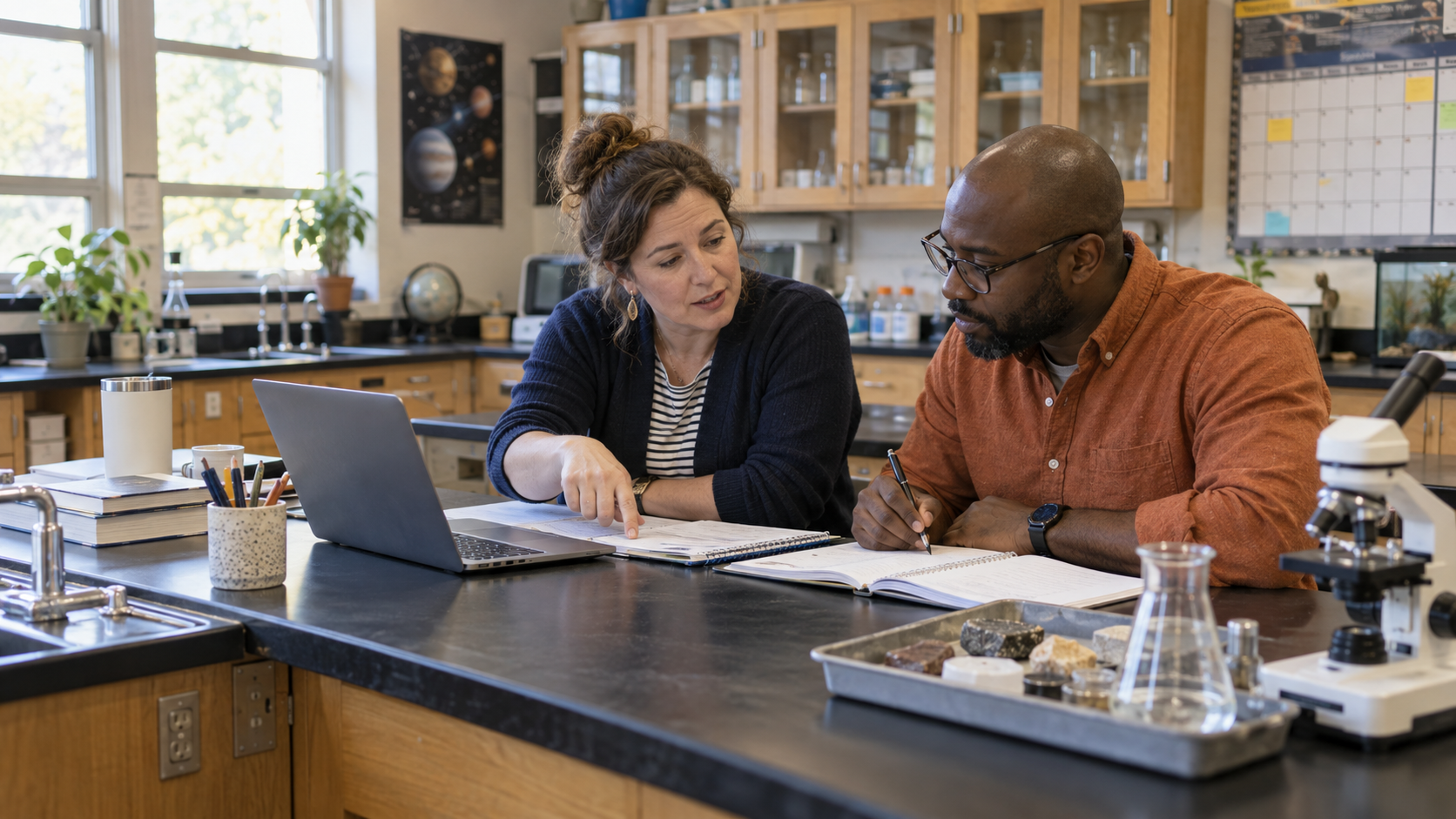
A new school schedule does more than rearrange the boxes on a timetable. It can move teachers into unfamiliar grade levels, give them courses they have never taught, or add preparations that require them to learn new content while keeping up with everything they already do.
I have been thinking about this because of changes at my own school, but also because I keep seeing similar posts from teachers online. They are not necessarily new teachers. Many are experienced and successful educators who have suddenly been assigned a different grade, a new subject, or a complex curriculum they have never used. They know how to teach, but they do not yet know this particular content, sequence, or set of materials.
That distinction matters. Being highly capable does not make an unfamiliar assignment easy. A teacher in this position is doing two jobs at once: learning the course and teaching it. Every lesson requires decisions that someone with years of experience in the grade may make automatically. What is essential? What can be shortened? Where are students likely to struggle? How long will this investigation really take? Which materials need to be prepared days in advance? What does the assessment actually expect students to understand?
Those questions make an ordinary lesson much heavier. This is where coworkers can make a tremendous difference.
Start by Reducing the Number of Decisions
When someone is overwhelmed by a new curriculum, sending them every resource you have collected may feel generous. Sometimes it is. Other times, a giant shared folder simply gives them another problem to solve.
The most useful first support is often a clear starting point: a pacing calendar, a short unit overview, a sequence of essential lessons, and a few notes about what tends to work. A minimalist guide can help a teacher enter a complicated curriculum without having to understand every option immediately. Once they have a foundation, they can add, modify, and personalize.
I have tried to support coworkers by sharing lessons and materials, explaining unfamiliar content, helping with pacing, coordinating by email, and creating calendars that show how the pieces fit together. I can identify which lessons are central, which activities can be compressed, and which concepts deserve more time. None of this replaces the other teacher's judgment. It simply allows that judgment to begin from a more informed place.
Good support does not say, “Here is everything I have ever made.” It says, “If you need to teach this next week, start here.”
Practical Support Should Change the Workload
Encouragement matters, but support becomes more meaningful when it changes what the overwhelmed teacher has to do. A message saying, “Let me know if you need anything,” is kind. A specific offer is easier to accept.
Depending on the situation, meaningful help might include:
sharing a ready-to-teach lesson rather than only a folder of possibilities;
explaining the content and the purpose of the lesson before discussing activities;
providing a realistic pacing calendar with built-in adjustment points;
creating a short curriculum guide that identifies the essential starting place;
preparing or sharing a simulation when a hands-on investigation is not possible;
offering access to a laboratory or classroom where materials are already set up;
inviting the teacher to observe the lesson before teaching it themselves;
guest teaching a particularly complex lesson while the other teacher supervises small-group or independent work in the neighboring class;
combining classes and co-teaching when the space and schedule make it possible;
and checking in after the lesson to help refine the next attempt.
These actions do more than make a coworker feel supported. They remove preparation, uncertainty, and duplicated effort from the system. If I have already spent hours understanding a lesson, building the materials, testing a simulation, or identifying the pacing problems, there is no educational virtue in requiring someone else to struggle through the same work alone.
Sometimes the Best Resource Is Access
Not every teacher has the same room, materials, or schedule. One of the simplest ways I can help is by offering to switch classrooms when I have already set up a laboratory or collection of equipment. The other teacher gets access to the environment their lesson needs, and I can take my class somewhere else for work that does not depend on the lab.
That kind of flexibility requires coordination, but it can transform what is possible. A teacher should not have to abandon a strong experience simply because the needed equipment happens to live in someone else's room.
The same is true of observation and guest teaching. Teachers are often told to observe one another, but there is rarely time built into the day. A temporary class swap can create that opportunity. I can teach the complex lesson while my coworker watches how it unfolds, and they can guide my students through independent practice or a small-group activity. Later, they can teach the lesson with a clearer picture of its pacing, transitions, and likely student responses.
This is not about demonstrating the “correct” way to teach. It is about making normally invisible knowledge visible. Experienced teachers carry countless small decisions in their heads. Watching the lesson can reveal those decisions faster than reading a plan.
Help Without Taking Over
There is an important difference between supporting a coworker and controlling their classroom. Sharing expertise should not become an opportunity to prove who knows more, demand that someone copy our preferred method, or treat an experienced teacher like a beginner.
The goal is to lower the entry barrier while preserving professional choice. I can say, “This is the sequence that has worked for me, and here is why,” while leaving room for the other teacher to change it. I can offer a simulation without implying that it is better than the hands-on lesson they prefer. I can explain where students commonly struggle without assuming that every class will respond exactly like mine.
Support should also be invitational. An overwhelmed coworker may want a complete lesson, a quick conversation, or simply reassurance that the first attempt does not need to be perfect. The person receiving the help should be able to decide what is useful.
At the same time, we should not wait until someone is visibly drowning. A teacher may be reluctant to ask because they do not want to appear unprepared. Specific, low-pressure offers make help easier to accept: “I already have the lab set up Thursday. Would you like to use my room Friday?” or “I made a one-page guide to the first unit. I can send it if that would save you some time.”
This Cannot Depend Only on Individual Generosity
Coworkers can do a great deal for one another, but schools should not treat informal generosity as the entire transition plan. When schedules or staffing decisions place teachers in unfamiliar assignments, administrators should recognize the additional workload. Teachers need curriculum access, common planning time, usable pacing guidance, materials, opportunities to observe experienced colleagues, and clarity about what is essential.
A strong team can soften a difficult transition, but it cannot permanently compensate for poor staffing, missing resources, or unrealistic preparation loads. Supporting one another should strengthen the system, not hide problems the system needs to address.
Still, the culture among teachers matters. Schools become harder places to work when everyone protects their own files, classrooms, materials, and hard-earned knowledge. They become more resilient when teachers treat expertise as a shared resource.
When One Teacher Gets Stronger, Students Benefit
Helping a coworker does not weaken my program or diminish the value of what I have built. It extends that value to more students.
If a pacing calendar saves another teacher several hours, those hours can go toward feedback, preparation, or rest. If a simulation allows their students to participate in an investigation that would otherwise be impossible, more students gain access to the learning. If they can watch a difficult lesson before teaching it, their first attempt becomes more confident and productive. If we combine classes or trade rooms, students experience the benefits of both teachers' strengths.
Supporting coworkers strengthens everyone because teaching is not a competition between isolated classrooms. The students down the hall are still our students. The teacher who is overwhelmed this year may be the expert who helps us through an unfamiliar assignment next year.
New schedules and teaching loads will continue to move people outside their usual grade levels and areas of experience. We cannot remove every challenge that comes with those changes, but we can make sure no teacher has to rebuild the entire road alone.
Expertise should be shared, not guarded.
