Before You Buy the Supplies, Ask the Families
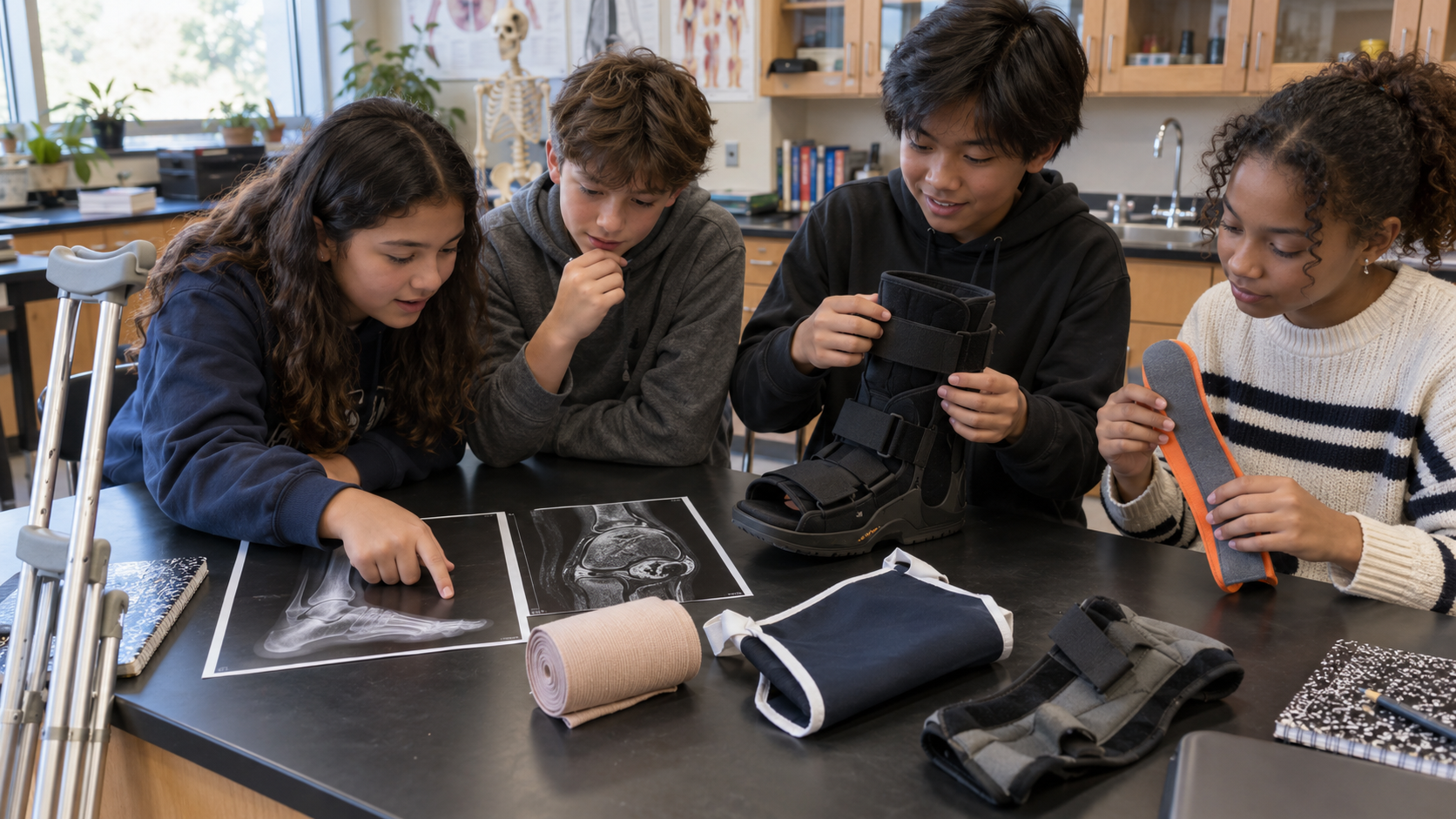
Middle-school science students examine donated braces, wraps, crutches, and medical images during an injuries and healing unit.
We are about to begin our injuries and healing unit, and I wanted the launch to feel more connected to the real world than a set of pictures on a screen. So I emailed every student and family and asked for help. I was looking for the kinds of objects people often have tucked into a closet after an injury: crutches, braces, splints, ACE wraps, air casts, walking boots, slings, and bandages. I also asked about de-identified X-rays, MRIs, or anything else that could help students see what injuries and recovery actually look like.
I sent the message early on a Saturday morning. Most families did not respond, but enough did that the response felt overwhelming in the best possible way. Families offered braces, wraps, imaging, and other recovery equipment. I also learned that many parents and guardians work in medical fields. One family shared a remarkable video of a donor heart beating outside the body in a sterile environment while awaiting transplant. It is not directly part of our foot-injury storyline, but it reminds students that the systems we study are not just diagrams. They are living structures that medical teams work to protect, repair, and sometimes sustain under extraordinary circumstances. The donations will make this unit better, but the larger realization may make my entire year better.
Families Can Contribute More Than Classroom Supplies
Teachers are accustomed to asking families for tissues, pencils, plastic bags, and disinfecting wipes. Those materials matter, but our classroom communities have much more to offer. Families have expertise, experiences, professional connections, old equipment, unusual photographs, and stories that can make academic content feel real.
As a parent, I know that my wife and I are usually willing to help when a teacher makes a specific request. My wife is a medical professional, and I know people in medical and environmental fields. If one of my children's teachers said, “We are beginning an environmental unit and need someone who can explain how this work happens outside school,” I could probably make a useful connection. Teachers rarely ask—not because they do not value families, but because asking takes time, can feel awkward, and may create additional logistical work. This email reminded me that families are already a resource network. They may simply need to be told what would be useful.
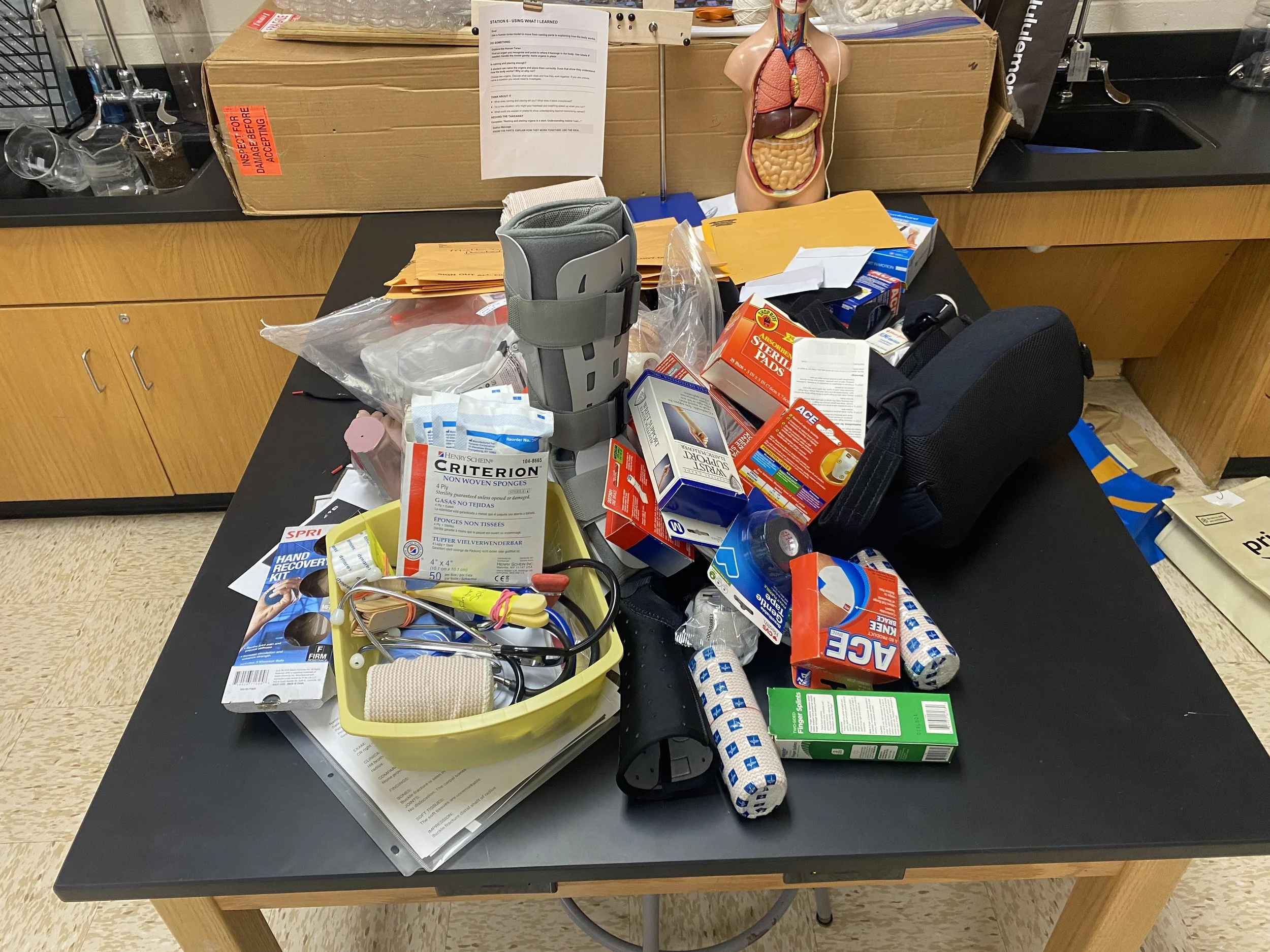
A mountain of injury and healing goodies to get kids engaged.
A Better Beginning-of-Unit Routine
I am now considering making this kind of message part of every major unit. Instead of only requesting materials, the email could preview what students are about to study:
the main phenomenon or problem;
the major ideas students will investigate;
approximately how long the unit will last;
important quiz or assessment dates;
examples of optional materials that could support the learning;
and an invitation to share relevant professional knowledge or personal experience.
For chemistry, perhaps a family member works in a laboratory, pharmacy, manufacturing facility, water-treatment plant, or kitchen. During metabolic reactions, families may know physicians, nurses, dietitians, athletic trainers, or exercise scientists. For plants and ecosystems, there may be gardeners, landscapers, farmers, park employees, marine scientists, or conservation volunteers in our community.
Not every connection needs to produce a classroom visitor. Someone could share a photograph, record a short video, answer a few student questions, lend an object, recommend a local example, or help me avoid teaching something in an unrealistic way. The question is not only, “What can you donate?” It is, “What does our community know?”
Including Students in the Conversation
When appropriate, I include students on broad classroom messages rather than communicating only with adults. They may not read every email, but I want them to be part of the conversation about what we are learning and building together. This has become easier because I created a secure, district-approved contact reference organized by class. I no longer need to reopen multiple grade books and reconstruct the recipient list every time. It is a small organizational change, but sometimes the difference between a good idea and something we actually do is a system that saves five annoying minutes.
Group communication still requires care. Family contact information should remain in approved school systems, recipients should not see one another's private addresses, and medical images must be shared with permission and stripped of identifying details. Convenience cannot come at the expense of privacy.
The Invitation Must Remain an Invitation
Families have different amounts of time, money, access, and professional flexibility. Some can donate equipment or arrange a guest speaker; others cannot respond at all. A student's classroom experience should never depend on whether their family contributes. The invitation must be genuinely optional, with no pressure, competition, or suggestion that donating earns a child special treatment.
The purpose is to turn hidden community resources into shared classroom resources. If one family lends a walking boot, every student can examine it. If one professional answers questions, every class can learn from the answers. If someone shares a de-identified X-ray, hundreds of future students may be able to study it.
From Donations to Partnerships
Last year, families gave me several materials that I could keep and reuse. This year's request may add enough equipment to create an impressive injuries-and-healing collection that students can touch, compare, test, and connect to the structures they are studying. But I do not want this to become only a story about acquiring free things. What excited me most was discovering how many people connected to my classroom have useful knowledge and genuinely want to help. The email gave them a doorway into the curriculum.
I am also curious whether a future DonorsChoose project or another school-approved funding option could support the same goal. A public project might help fund durable materials that benefit current students and future classes, provided it remains transparent, pressure-free, and completely separate from how any child is treated.
For now, the simplest move worked: I told families what we were learning, described what could make the unit better, and asked whether anyone could help. At worst, a message like that receives no response and the classroom continues as planned. But in almost every school community, somebody knows something, has something, or can connect the teacher with someone useful. We just have to ask.
